
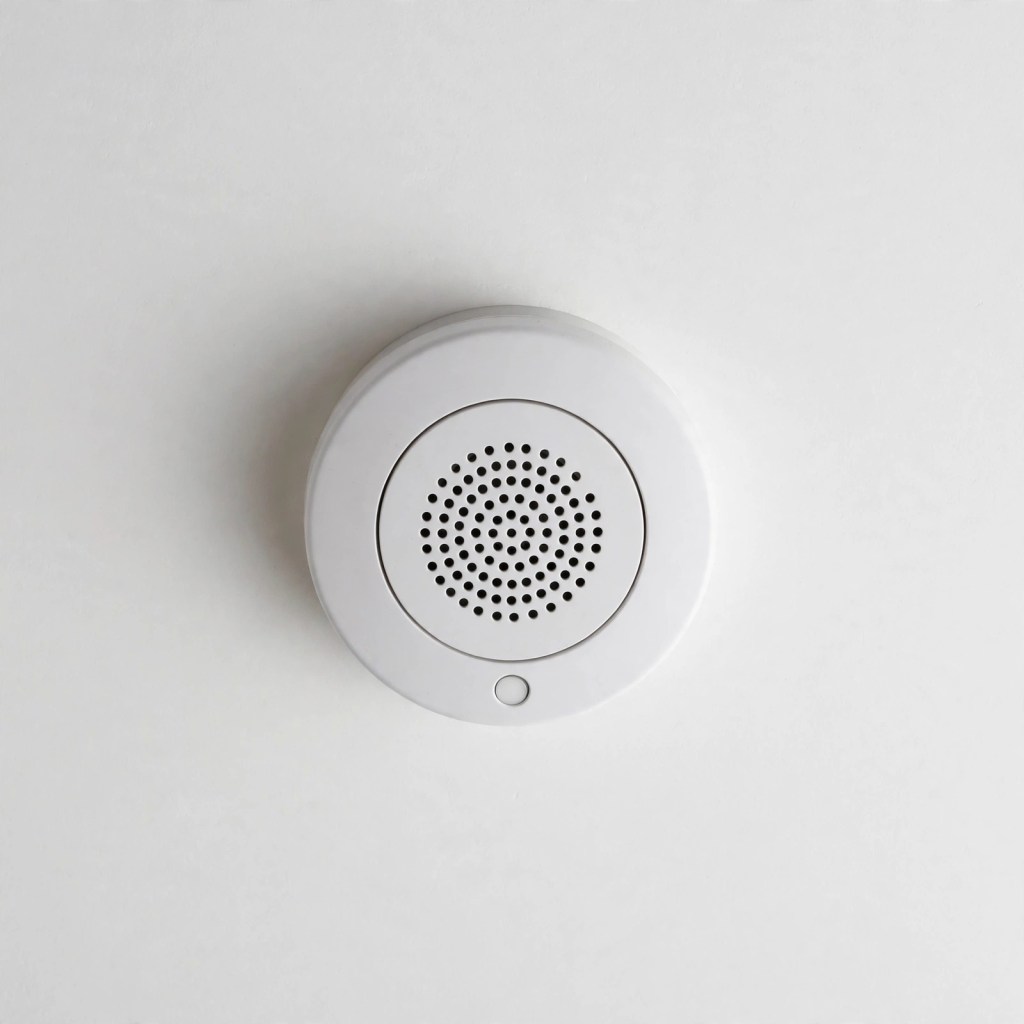
If your smoke detector is going off, stop and take it seriously. Most of the time it’s a false alarm — cooking, steam, or dust — but you should never assume that until you’ve checked.
First: if you see smoke, smell smoke, or see flames
Get everyone out of the house right away, call 911 from outside, and don’t go back in. Don’t open doors to look for the fire, and don’t try to find the detector that’s sounding. Getting out comes first.
If there’s no smoke, no smell, and no fire
- Check the obvious first. Is someone cooking, showering, or running a steamy dishwasher? Steam and cooking smoke are the most common triggers, especially for a detector too close to a kitchen or bathroom.
- Find which one is sounding. In most homes they’re interconnected, so they all go off together. The one with the flashing red light is usually the one that triggered.
- Silence it, don’t remove it. Press the hush/silence button. Don’t take the detector down, and don’t take the battery out and leave it out — that’s when people forget, and a house ends up unprotected.
- Air it out. Open a window or turn on a fan near the kitchen or bathroom. If it was steam or cooking smoke, it should settle in a few minutes. If it keeps going off with the air clear, move on to the next steps.
- Check the battery. A low battery usually gives a single chirp every 30 to 60 seconds, not a full alarm. If it’s chirping, change the battery — and if it’s a sealed 10-year battery, the whole detector needs replacing.
- Clean it gently. Dust and cobwebs inside a detector can set it off. Turn the power off at the breaker if it’s hardwired, then vacuum around the vents gently with a soft brush, or wipe the outside with a dry cloth. Don’t spray cleaners into it.
- Check the age. Look at the date on the back. Smoke detectors should be replaced every 10 years — after that they get less reliable and false alarms get more common. If you don’t know how old it is, it’s time to replace it.
- Check the placement. A detector right outside a kitchen, in a steamy bathroom hallway, or near a heating vent will false-alarm a lot. Kitchens need a detector at least 10 feet from the stove, and bathrooms need one well away from the shower steam.
- Test it after. Once it’s quiet, press the test button and hold it for a few seconds. You should hear the alarm, and all the interconnected ones should sound too. Test monthly — it takes 30 seconds.
- When to call an electrician. Call us if: it keeps going off for no clear reason, one detector keeps triggering the others, a hardwired detector has no power, it chirps with a new battery, or your detectors are over 10 years old and need replacing. Interconnected and hardwired systems are electrical work — that’s not a homeowner fix.
What not to do
Don’t disconnect a detector and leave it disconnected. Don’t paint over a detector — paint clogs the sensor. And don’t ignore a detector that goes off at night — check it the same way, even if it’s probably steam or dust.
If you’re not sure whether it’s a false alarm or a real problem, get out and call 911. It’s always better to be safe and have it be nothing.
McLeod Electric — Hanson, MA — (781) 447-6040. Mon–Fri 8–5, emergencies call anytime.


Leave a Reply